Curiously Cinnamon
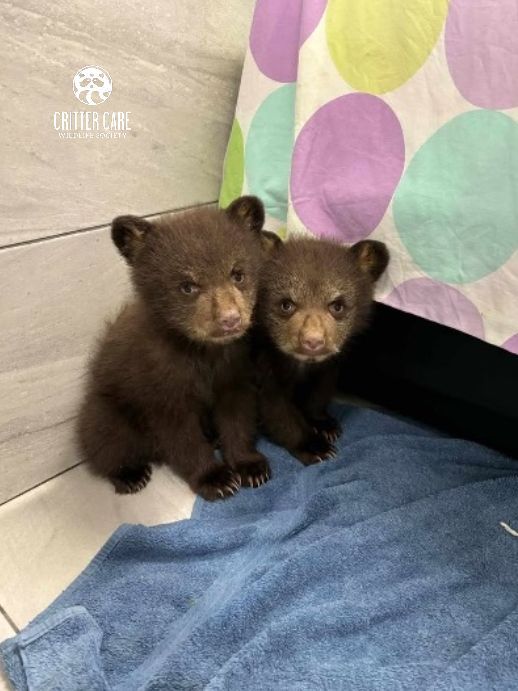
Arrival of the Cinnamon Twins
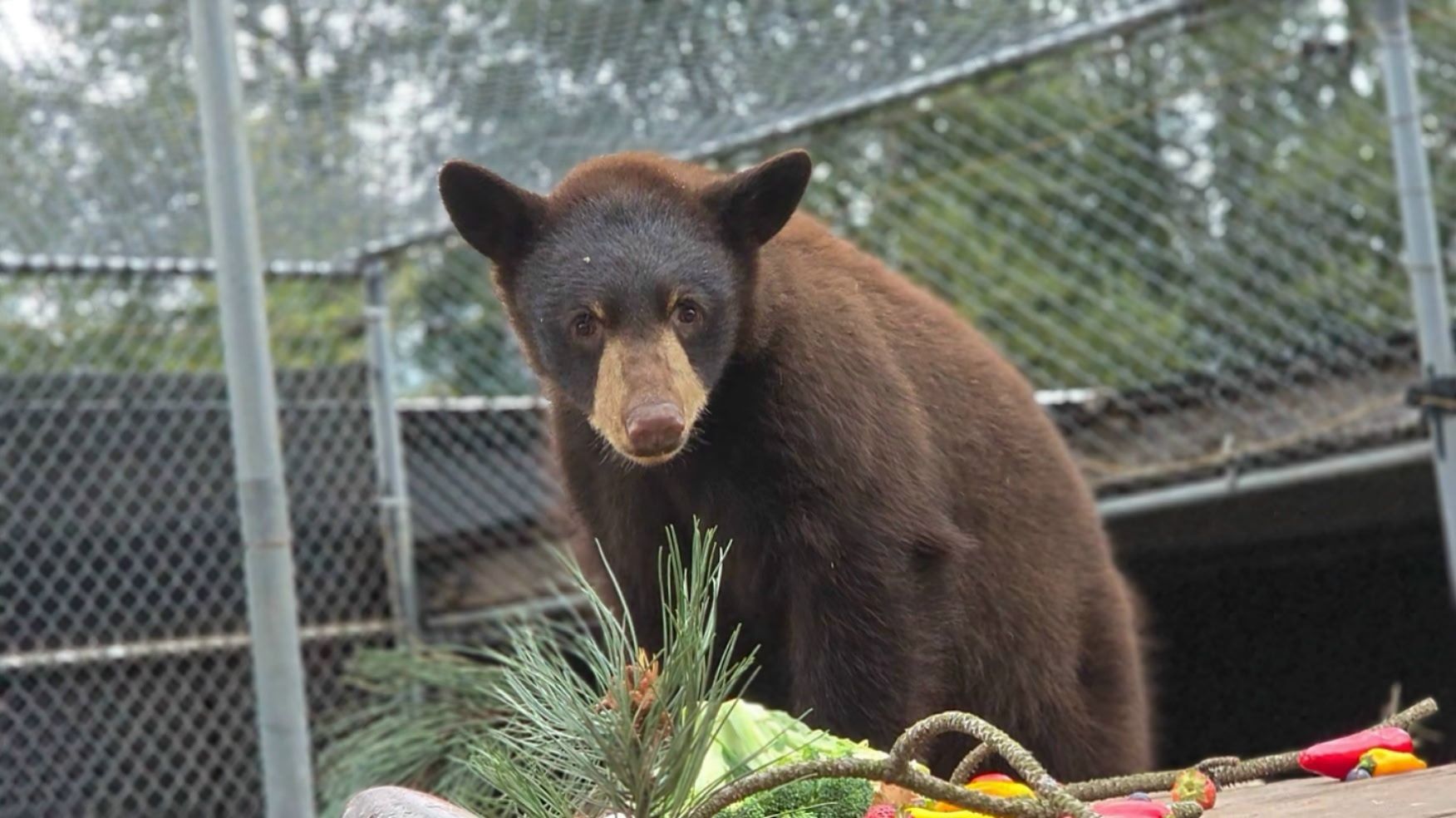
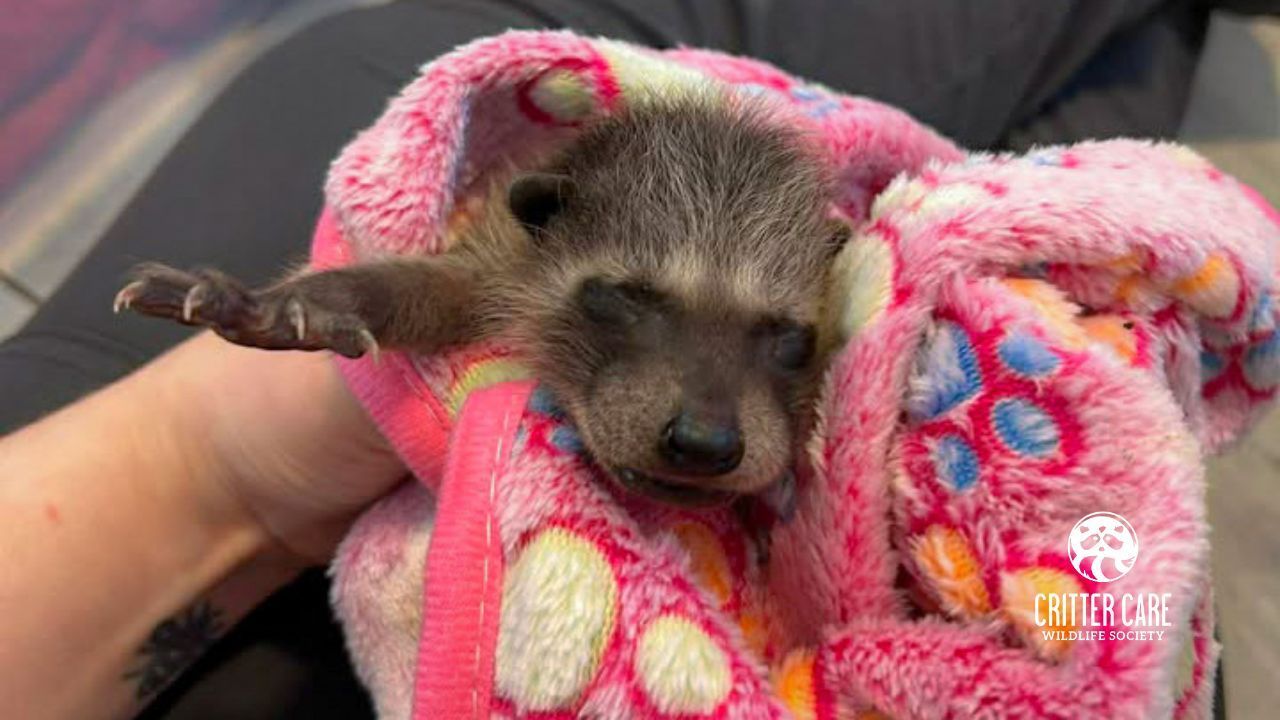
In May 2025, while we were preparing to release our cubs from the previous year, we received a call from Squamish about two orphaned black bear cubs. A vehicle had struck their mother, leaving the tiny sisters on their own. When they arrived at Critter Care, each cub weighed close to five pounds, about the size of a young Labrador puppy.
Learning to Feed
At this stage of development, the cubs needed milk feeds several times a day. Luke Williams, our bear supervisor at the time, stepped in to help, bottle in hand. The girls quickly made it clear that this two-legged creature in a baseball cap was not their mother. Once we offered their milk in bowls instead of bottles, they dove in with enthusiasm and created impressive messes that kept our staff busy.
Growing and Exploring
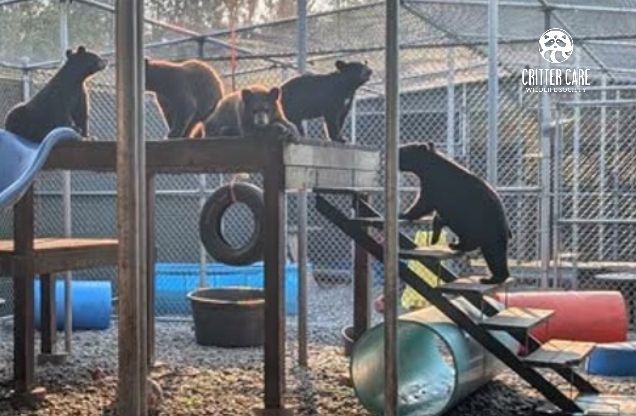
As the sisters gained strength, we provided a large indoor living space where they could play, climb, and explore without the distractions of the main centre. We introduced toys and structures that encouraged natural behaviours. We also placed grasses and cedar branches with sap inside their enclosure so they could learn about the scents and tastes they would encounter in the wild.
Moving to the Outdoor Enclosure
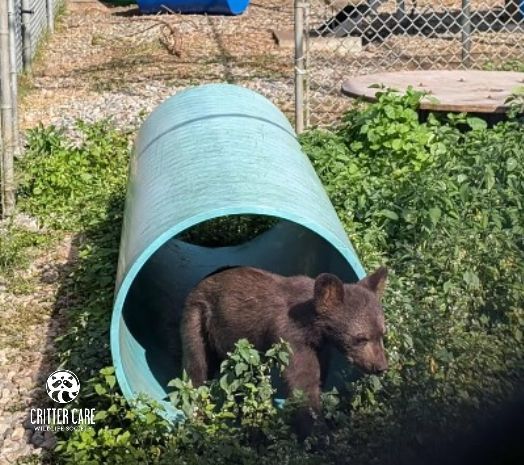
When the time came to move outside, we began their transition in the isolation shed. This first step allowed the cubs to adjust to new surroundings at a comfortable pace. Once they settled, we slowly opened access to their outdoor space where they would live until next year’s release season. Shortly after this move, a third cub from the Sunshine Coast arrived. We introduced him slowly, and the cinnamon twins soon welcomed their new brother.
Joining the Larger Bear Family
Over the following months, more orphaned cubs came into our care. The cinnamon sisters naturally asserted themselves as the dominant pair among the younger arrivals. They continued to grow steadily
and by the end of August had fully transitioned off their milk diet.
Preparing for Winter
The twins now weigh between forty and fifty pounds and will soon enter hyperphagia. During this phase, they instinctively increase their food intake to build the fat reserves needed for the long winter ahead. Their progress shows strong signs that they are on track for a healthy release next year.
Critter Care Wildlife Society News

Sign up to get inspiring stories of rescue,
rehabilitation and release from Critter Care
Be the first to receive our newsletter, new blog posts, and updates
about our most critical needs and community news.