The Dos and Don’ts of Baby Season
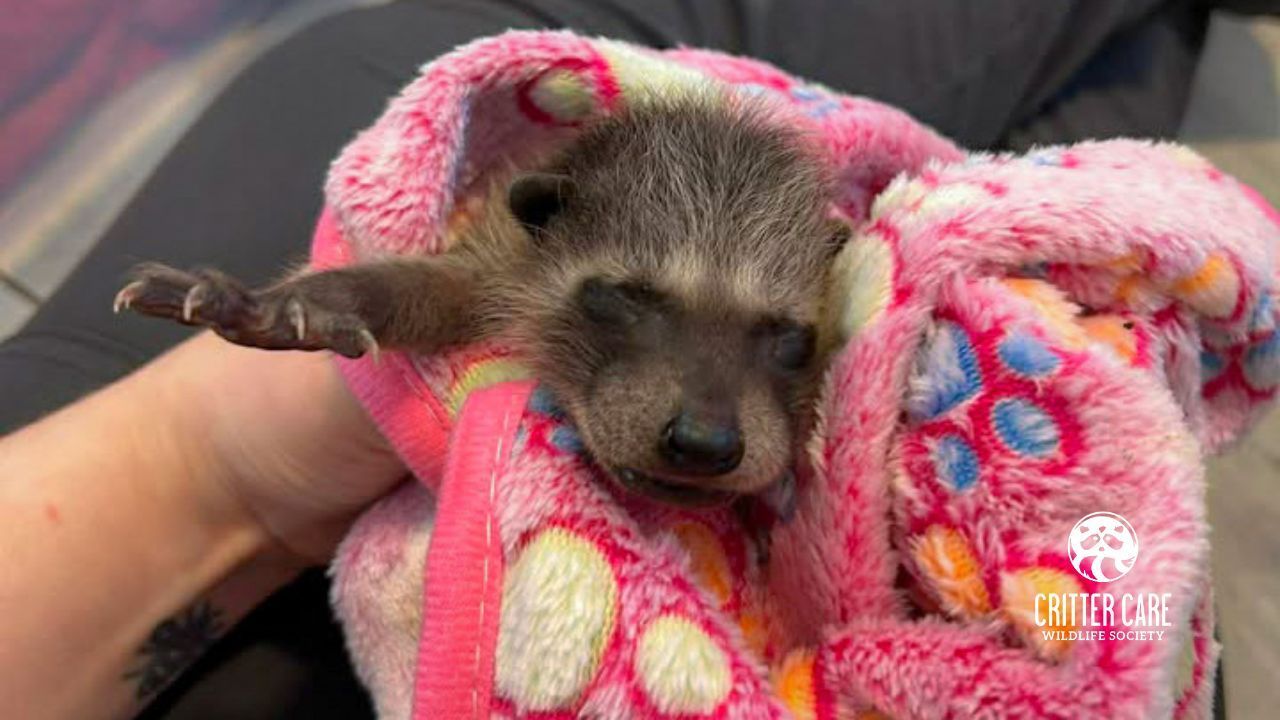
As many of you know, baby season is upon us at Critter Care! Before we receive our first young of the year, we would like to go over some common misconceptions and mistakes to avoid any unnecessary admissions or mistaken orphans.
Want to know how you help? See below.
If you find a baby animal, the best thing to do is to call a licensed wildlife rehabilitation centre. More often than not, a found baby animal is not orphaned. In most mammal species, mama must go back and forth between her den/nest site to forage for herself. If mama decides to relocate the babies, she must find a suitable den/nest site and move her babies one by one. It is important to give her time and space. We recommend leaving the animal for 24 hours in a warm and safe place located close to or beside the den before intervention, unless signs of injury or illness are present.
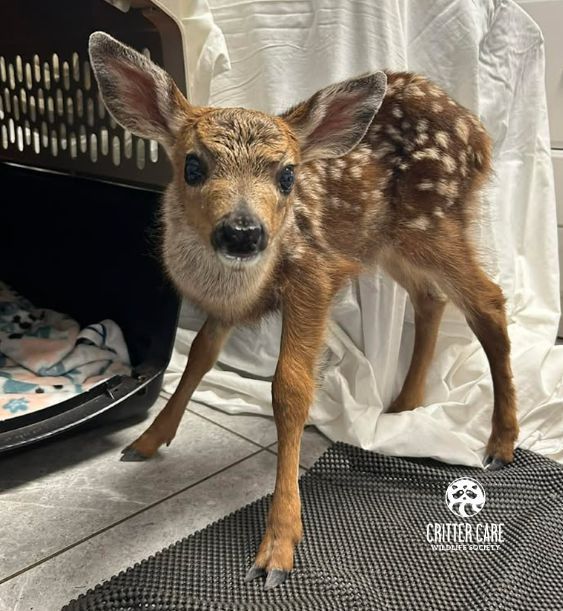
If you find a baby squirrel at the base of a tree, for instance, and it is in good health, it most likely fell from the nest. You can put the squirrel in a warm box with an open top, so its mother has access to it. Most times, the mother squirrel will come down the tree and retrieve her baby within hours. This method of reuniting can apply to other species as well. In many cases, the mother will not come around until nightfall, when humans, loud noises, pets, etc. are at rest.
Rabbits tend to feed their young at dawn and dusk, so finding a nest of baby bunnies does not necessarily mean they have been orphaned. We recommend placing an X of string or a ring of flour around the nest, which can be checked in 24 hours for any disturbance.
If you find a possibly orphaned animal and are asked by a rehabber to leave it in a box or in the nest for a time, please give the mother space to come and collect her baby. If humans are standing in close proximity to the baby, she is unlikely to return until the threat is gone. If possible, please keep pets inside during this time if the young are in your backyard or garden.
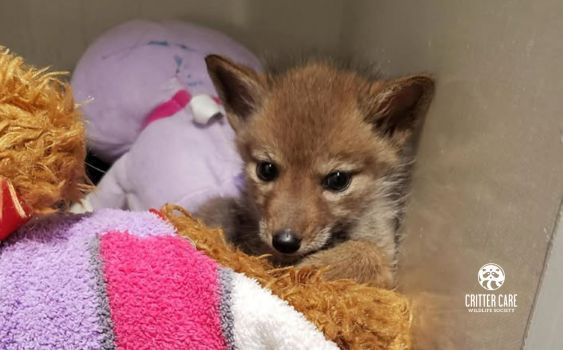
Wild animals are different in some ways from domestic animals and cannot withstand certain interventions that domestics can. Please do not administer any medication, feed any milk/water/electrolytes, or handle/let children handle the baby excessively. All of these measures can shut down the baby’s body, especially if hypothermic, emaciated, or ill/injured. Incorrect feeding methods and equipment can also prove fatal to a baby animal, so it is best to keep the baby warm and get it to us as soon as possible once asked to bring it in. We have specialized milk formulas and feeding equipment for each species we intake. When an animal arrives at our centre, we will warm it up and give fluids once the body is ready.
Opossums are the exception to some of the above rules. If you find a baby opossum with no mother in sight, it needs to be brought to a rehabber as soon as possible. Mama opossums carry their babies in their pouch or on their back depending on age. If one baby falls out/off, mama will not return for it.
If you see any baby animal that is visibly injured, emaciated, lethargic, cold, or vocalizing constantly, please call us immediately for further instructions. Other signs of distress include flies swarming around the baby or a baby out in the open (not in a den or nest) for an extended period of time.
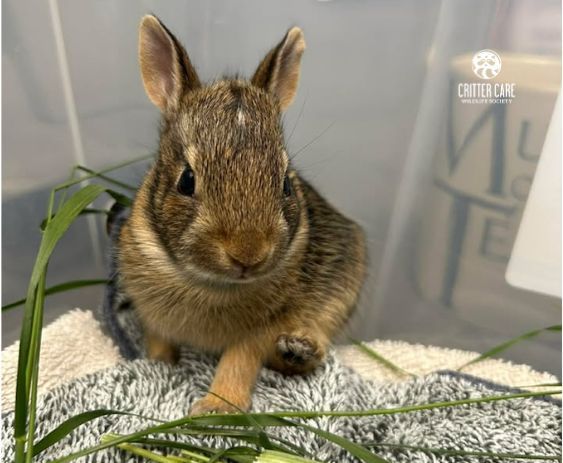
As wildlife are often at our feet without us even knowing, we always recommend doing a sweep of your lawns, plant pots, bushes, and trees before mowing, trimming, or removal! Rabbits, squirrels, mice, moles, and other small creatures enjoy nesting in these areas.
It is also a good idea to patch up any holes or entryways around your home before animals begin nesting. Once an animal has begun nesting, it is important to contact a licensed removal company, as many species are protected under the wildlife act.
Remember, it is illegal to be in possession of wildlife without a permit! Always contact your local rehabber if you are unsure of protocols.
Before you help a baby animal, take a moment to review these baby season dos and don’ts.
Do:
- Call a licensed wildlife rehabber.
- Clarify that the animal needs care.
- Wait 24 hours before assuming an animal is orphaned (unless illness/injury are present or the animal is a lone opossum).
- Check your lawn for rabbit warrens before mowing.
- Check plant pots, bushes, and trees before trimming or removal.
Don’t:
- Feed the baby anything.
- Take a baby inside without confirming it is orphaned.
- Take an injured/orphaned/ill animal out of the wild and attempt to heal it yourself.
- Excessively handle or let children handle a baby animal.
- Let pets near a baby animal.
How you can help...
Here at Critter Care, we are beginning our preparations for another busy spring/summer.
We are currently in need of the following:
- Sterile .5 and 1 inch needles (21 - 27G)
- Small and medium fleece blankets
- Plain rice cereal
- Bleach
- Toilet paper
- Gerber puffs
- Raw almonds/walnuts
- 5oz/150mL Gerber baby bottles
- disposable gloves (all sizes)
Please note: we are currently full for towels, sheets, and stuffed animals, so please call in advance to make sure we have room!
Most of these items, as well as others, can be found on our Amazon Wish List below! We are open 9am - 4:30pm, 7 days a week for donation drop offs and, for after hours drop offs, we have a donations table outside our main gate.
Thank you for your continued support!
Critter Care Wildlife Society News

Sign up to get inspiring stories of rescue,
rehabilitation and release from Critter Care
Be the first to receive our newsletter, new blog posts, and updates
about our most critical needs and community news.